Voyant Develops High-Precision Navigation System for Autonomous Vessels in GNSS-Denied Littoral Environments
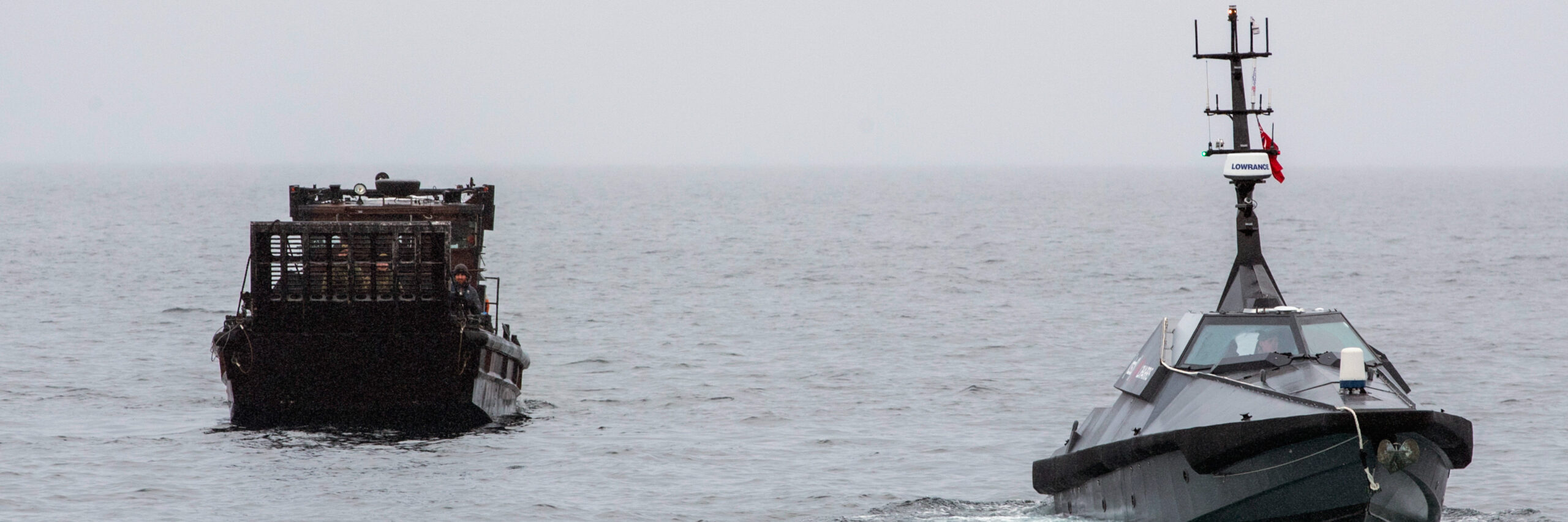
Voyant, a leading tracking and data fusion company, today announced the development of a highly accurate navigation system for autonomous maritime vessels operating in GNSS-denied environments. The programme is being delivered in collaboration with a leading maritime autonomy manufacturer and a partner nation within NATO.
Designed specifically for the challenges of the littoral environment, where satellite navigation signals are often degraded or denied, the system applies Voyant’s advanced particle filter algorithms to radar imagery. By map-matching real-time radar data against pre-existing reference radar maps, the solution can precisely determine the position of an autonomous vessel, even in complex coastal and congested waters.
This approach enables resilient, highly-accuracy navigation without the reliance on GNSS, supporting a wide range of applications including defence, security, and autonomous maritime operations.
James Norwood, CEO of Voyant, commented:
“As a former Royal Navy navigation officer and an Associate Fellow of the Royal Institute of Navigation, I find the rapid advancement of navigation in GNSS-denied environments particularly compelling. At Voyant, working alongside exceptional partners, we are significantly advancing the science of navigation and delivering practical solutions for real-world operational challenges.”
With increasing reliance on autonomous maritime systems and growing awareness of vulnerabilities in satellite-based navigation, Voyant’s solution represents a critical step forward in ensuring safe, reliable, and mission-ready operations in contested and signal-challenged environments.